
In today’s fast-moving and highly competitive market, businesses of all sizes—whether small startups or established enterprises—face enormous pressure to optimize efficiency, cut costs, and deliver better customer experiences. Yet, many companies still rely on outdated systems, disconnected tools, and manual processes that drain time and resources.
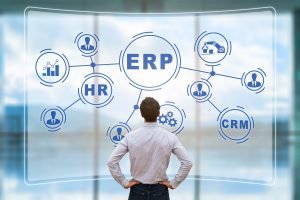
To bridge this gap, Enterprise Resource Planning (ERP) has become an essential solution. Far from being just an IT system, ERP is a strategic enabler of growth and transformation. It unifies finance, sales, inventory, HR, operations, and customer management into a single integrated platform, giving businesses a 360-degree view of performance while enabling smarter decision-making.
What is ERP and Why Does It Matter?
ERP, or Enterprise Resource Planning, is a business management software that integrates core functions into one centralized system. Instead of operating in silos—finance using one tool, HR another, and operations tracking data on spreadsheets—ERP consolidates everything into a single platform.
For example:
-
Your finance team can instantly track purchase orders raised by operations.
-
Your sales team can view stock availability in real time before confirming deals.
-
Management can access dashboards with consolidated insights on profitability, costs, and resources.
This seamless flow of information eliminates duplication, reduces manual errors, and builds efficiency across the organization.
The Key Benefits of ERP Implementation
1. Improved Efficiency and Productivity
ERP automates repetitive processes such as data entry, payroll, invoicing, and reporting. Employees spend less time on manual tasks and more time on strategic initiatives. This not only boosts productivity but also reduces operational bottlenecks.
2. Real-Time Visibility and Insights
One of the biggest advantages of ERP is the availability of accurate, real-time data. Business leaders can access dashboards showing sales trends, cash flow, or supply chain performance at any moment—allowing faster and smarter decisions.
3. Cost Savings and ROI
While ERP requires upfront investment, the long-term savings are significant. Reduced errors, optimized inventory management, improved forecasting, and better resource utilization often translate into measurable cost reductions within the first few years.
4. Scalability for Growth
As businesses expand, ERP scales with them. Whether you are opening new branches, entering new markets, or adding new product lines, ERP supports growth without disrupting existing operations. Cloud ERP in particular makes scaling fast, flexible, and cost-efficient.
5. Enhanced Collaboration Across Teams
Since all departments share the same system, collaboration improves naturally. Information flows seamlessly between teams, reducing delays and miscommunication. This fosters a culture of transparency and accountability.
Why ERP is No Longer Optional
Digital transformation is no longer a luxury—it is a survival strategy. Customers expect faster responses, personalized service, and reliable delivery. Competitors are already leveraging ERP and advanced technologies to enhance their agility.
Relying on spreadsheets or disconnected legacy systems makes it nearly impossible to compete. Without ERP, businesses risk:
-
Inefficient operations that lead to higher costs.
-
Delayed decision-making due to poor visibility.
-
Missed growth opportunities from lack of scalability.
-
Lower customer satisfaction due to process errors or delays.
In short, the longer a business waits to implement ERP, the harder it becomes to catch up with competitors who are already embracing digital transformation.
ERP for SMBs: Breaking the Myth
A common misconception is that ERP is only for large enterprises. Today, cloud ERP solutions have made implementation accessible and affordable for small and medium-sized businesses (SMBs).
For instance, a growing distribution company can use ERP to:
-
Track inventory across multiple warehouses.
-
Automate purchase orders when stock runs low.
-
Generate financial reports instantly.
-
Provide sales reps with real-time access to product availability.
This not only improves efficiency but also positions the SMB to scale and compete with much larger players.
Real-World Example: ERP in Action
Consider a mid-sized manufacturing business that relied heavily on spreadsheets and manual coordination between finance, sales, and production. Orders were often delayed because the sales team sold products that weren’t actually in stock, while finance struggled to track costs in real time.
After implementing ERP:
-
The sales team had instant visibility into inventory.
-
Production schedules were automatically aligned with customer demand.
-
Finance gained accurate insights into costs and margins.
-
Customer satisfaction improved as orders were delivered faster and more reliably.
Within 12 months, the business reported a 20% increase in efficiency and a significant boost in profitability.
The Future: Cloud ERP and AI-Driven Insights
The ERP landscape is rapidly evolving. Cloud-based ERP systems provide businesses with flexibility, reduced IT overheads, and anytime-anywhere access. Moreover, modern ERP platforms now integrate with AI and analytics tools—helping businesses forecast demand, predict maintenance needs, and even automate decision-making.
For businesses committed to staying relevant and competitive, investing in ERP is not just about today’s efficiency but also about preparing for the future of intelligent, data-driven operations.
Final Thoughts: Take the First Step
Implementing ERP is not just a technology upgrade—it’s a strategic decision that transforms how your business operates. By streamlining processes, enabling data-driven decisions, and supporting scalable growth, ERP lays the foundation for long-term success.
If your business still depends on spreadsheets, disconnected tools, or legacy systems, now is the time to act. The longer you wait, the more opportunities you lose to competitors who are already leveraging ERP to their advantage.
At Arvant Business Solutions, we specialize in helping businesses assess, implement, and optimize ERP systems tailored to their needs. Our approach ensures smooth adoption, reduced risk, and measurable results from day one.
ERP isn’t the future—it’s the present. The question is: will your business embrace it now or struggle to catch up later?
Contact us today to discuss your ERP requirement !